
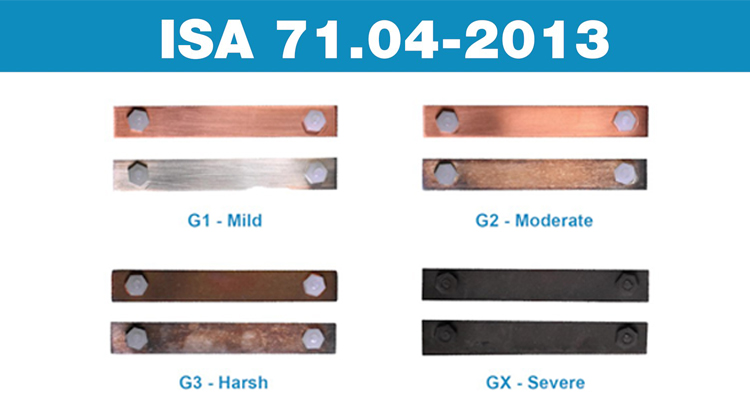
ANSI/ISA-71.04-2013 is one of the most widely used industrial standards for the protection of electronic equipment, covering various environmental conditions affecting electronic equipment, including process measurement and control systems, data communications and IT hardware, and office electronics. The increasing complexity and decreasing size of electrical components, paired with the introduction of RoHS Lead-Free Initiatives made this standard necessary. Within this standard are the ISA Environmental Classifications. These classifications are used to define an environment’s severity. This corrosion is measured in angstroms, which is a unit of length equal to one hundred-millionth of a centimeter, 10−10 meter. This data is measured in such tiny increments because even small amounts of corrosion can cause failure in sensitive electronics. This video explains what each ISA level indicates about how your environment is impacting your electronics.
Recommended Posts
Categories
Archives
Lessons from the April 2026 West Virginia Chemical Release and the Role of Advanced Gas-Phase Filtration On April 22, 2026, a chemical release at an industrial facility in Institute, West Virginia resulted in fatalities and widespread injuries. The event was caused by the formation and release of hydrogen sulfide (H₂S), one of the most acutely […]
Author:
Date: 2026-04-28
View More

The modern data center has become the beating heart of AI, financial services, cloud infrastructure, and national security. As facilities increase in density and computational load, traditional environmental control strategies are struggling to keep pace. The industry is beginning to understand that temperature alone is an incomplete metric for environmental health. The future of resilient, […]
Author:
Date: 2025-10-10
View More

As the backbone of our digital lives, data centers have always faced a suite of fundamental needs: With the rise of artificial intelligence, those needs are only becoming more essential—and more difficult to meet. AI workloads are hungry, not just for processing power, but for energy, and consequently, cooling. As heat loads rise, so does […]
Author:
Date: 2025-06-17
View More